THINGS WON’T ALWAYS BE THIS WAY
a new performance by Greg Wohead
Things Won’t Always Be This Way is a theatre performance that combines live singing, scenic transformation, projected text and a shifting world of strange, uncanny events. A human voice becomes caught in the unresolved ending of Roy Orbison’s Crying as a realistic hotel room is constructed, inhabited and eventually dismantled around it. The work moves between emotional intensity and theatrical artifice, allowing familiar things—a song, a room, a story, a stranger—to gradually become unstable and strange.
Growing from an autobiographical encounter during a moment of distress, the performance explores what can happen when another person interrupts our isolation. Against a contemporary backdrop of loneliness, disconnection and uncertainty about the future, it considers the force of a small encounter between strangers: how being noticed by another person might shift our experience of the present and open the possibility that things could be different.
An international co-commission with SPILL, Cambridge Junction, Alkantara Festival and Teatro do Bairro Alto, with support from Home Live Art. European premiere at Alkantara Festival in Lisbon, UK premiere at Cambridge Junction.
Early R&D previously supported by Gulbenkian Foundation and CAMPUS PCS.
Previous work
I have been making contemporary theatre and performance for over 15 years, with more than 100 public presentations across the UK, Europe and the USA. My work has been commissioned, developed and presented by organisations including Cambridge Junction, The Yard, Shoreditch Town Hall, Bristol Old Vic, HOME, Brighton Festival, Fierce, Mayfest and Fusebox Festival (USA), with international development through CAP UCLA/Los Angeles Performance Practice, mala voadora (Portugal) and other residency partners. Projects have received repeated support from Arts Council England, alongside funding and commissions from organisations including Jerwood Charitable Foundation, Peggy Ramsay Foundation and Gulbenkian Foundation and have received critical recognition from The Guardian, The Times, The Stage and others.
The three works below give a sense of the practice from which Things Won’t Always Be This Way is developing.
In Floods
2023
In Floods is a live performance in the form of a screenplay reading that unfolds into a choreography of total darkness and sudden light. Growing from the experience of returning to the same place for two almost identical family funerals four weeks apart, it uses the language of film, TV and confessional storytelling to explore memory, invention, grief, queer connection and the strange logic of personal narrative.
Co-commissioned by Teatro do Bairro Alto, Theatre in the Mill, Shoreditch Town Hall and Cambridge Junction. Supported by Arts Council England, GIFT, artsdepot and Soho Theatre. Presented at TBA Lisbon, South Street Reading, GIFT Festival, Cambridge Junction and Theatre in the Mill.
Comeback Special
2016
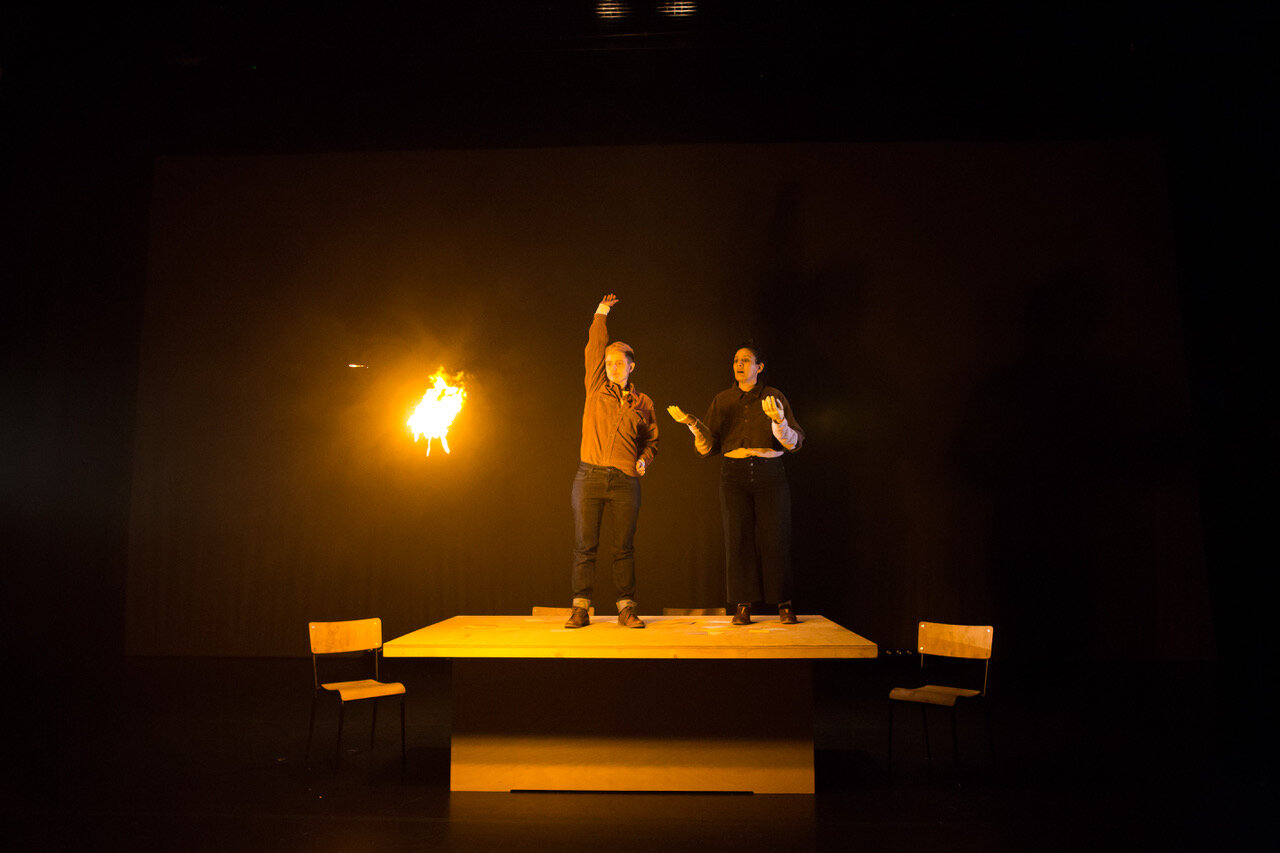
Comeback Special is a performance built around a reconstruction of Elvis Presley’s 1968 television special. Three performers repeatedly attempt to recreate the gestures, songs and images of the original, using reenactment to explore desire, gender, identity and the strange relationship between a live body and an iconic image from the past.
Co-commissioned by Shoreditch Town Hall, Theatre in the Mill and South Street Arts Centre, with a Jerwood Charitable Foundation/Bristol Old Vic Ferment commission. Developed with MAKE, Bios, Greenwich and Lewisham Young People’s Theatre and New Wolsey Theatre, with support from Arts Council England. Presented at Shoreditch Town Hall (London), South Street Arts Centre (Reading), Mayfest (Bristol) and Brighton Festival / Caravan Showcase.
“By blurring the line between performers and their public, as well as the past and the present, Wohead creates a special bond.”
— Donald Hutera, The Times


Call It a Day
2019
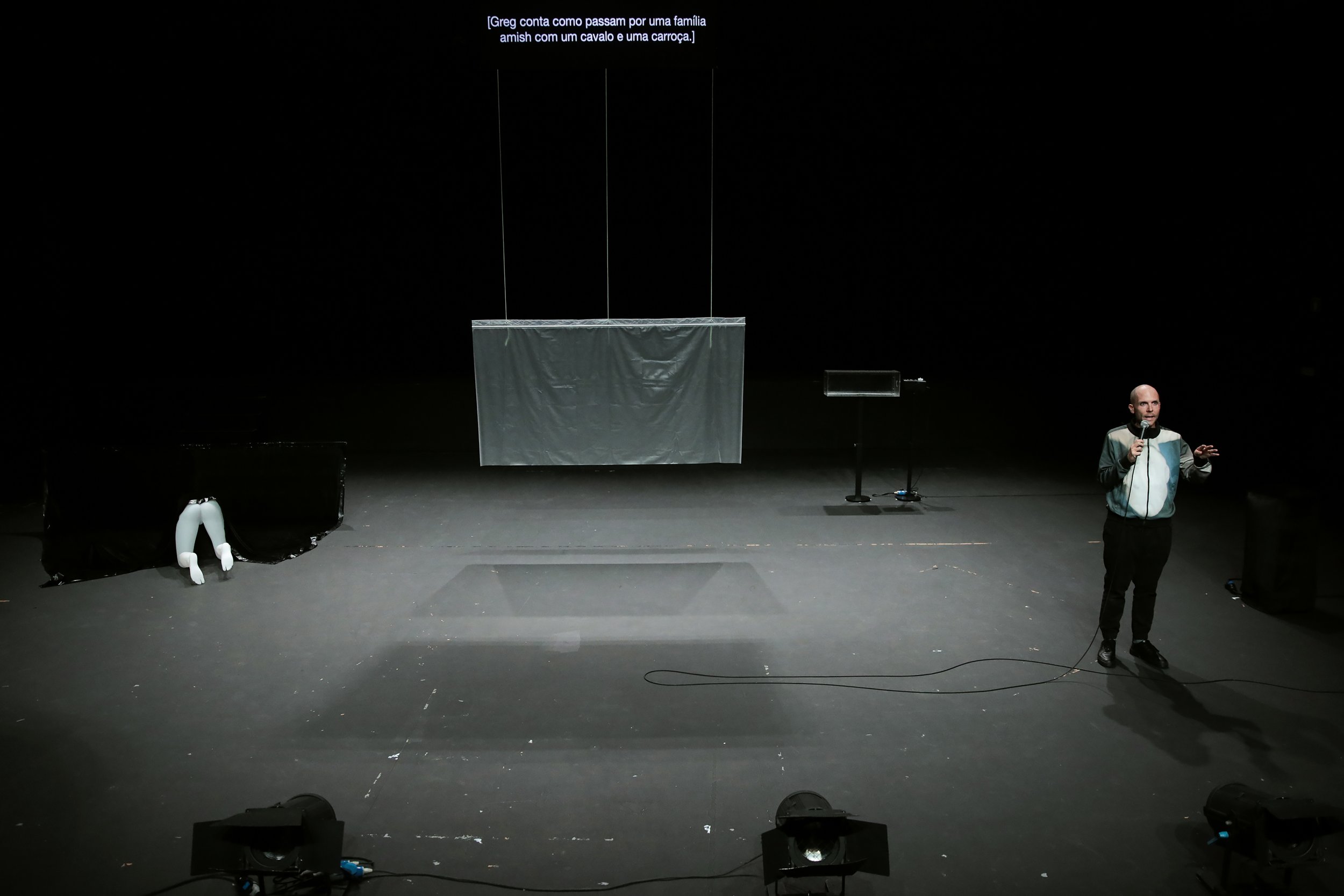
Call It a Day is a partially improvised performance for four people, based on an encounter with an Amish couple in rural Illinois. Replaying and repeatedly reconstructing that encounter, the work explores the desire to understand another person and the impossibility of ever fully doing so, alongside the instability of memory and autobiographical truth.
Co-commissioned by Theatre in the Mill, South Street, University of Reading, Chapter and The Yard, with additional support from Shoreditch Town Hall. Developed internationally through Los Angeles Performance Practice at CAP UCLA and mala voadora’s Dois por Dois residency in Portugal. Supported by Arts Council England and the Peggy Ramsay Foundation. Presented at The Yard (London), Chapter (Cardiff), South Street (Reading), The House (Plymouth), Experimentica (Cardiff) and LAX Festival (Los Angeles).
“In Wohead’s work, making theatre is an attempt to bring people and ideas to life…[and] demonstrates how hard true understanding – of both oneself and of another – is to achieve.”
— Kate Wyver, Exeunt


Things Won’t Always Be This Way
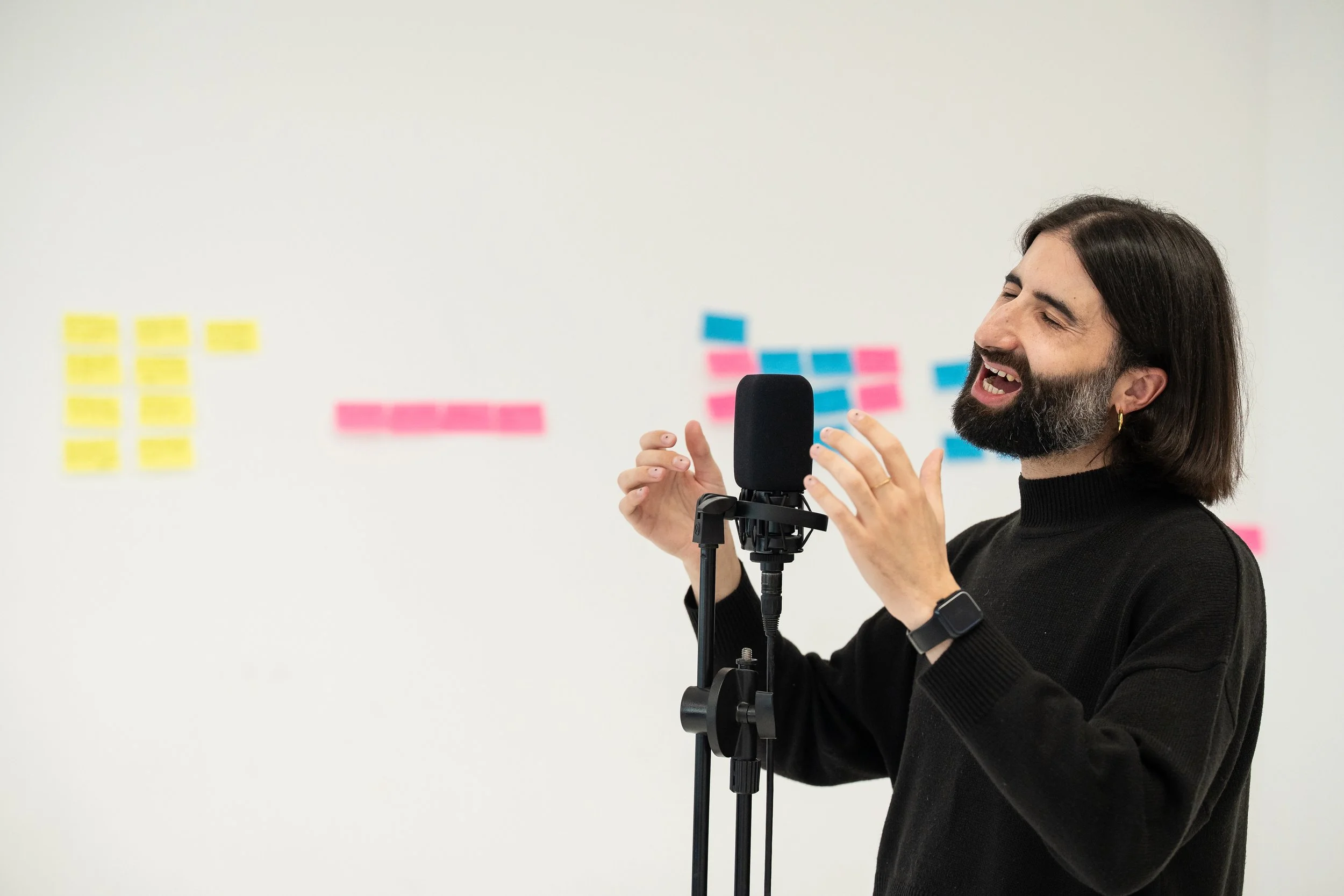
On an empty stage, João Neves begins Roy Orbison’s Crying. Just before the song ends, it gets stuck. He continues singing the final refrain, looping and stretching it across the performance. As he sings, stagehands begin constructing a complete hotel room around him. Walls go up. A bed is assembled. A bathroom, furniture and lighting appear. Gradually, over the course of the performance, an empty stage becomes a fully inhabited room.
As the room takes shape, strange events begin to inhabit it. A telephone rings and no one answers. A dog appears and disappears. A television comes on, displaying text addressed to an unknown ‘you’. It tells of missing a train, sitting outside a station and crying, and of a stranger who stops and says, ‘Things won’t always be this way.’ João continues singing throughout, caught inside the refrain as the world around him keeps changing.
The work grows from an experience in my own life, but opens that encounter onto wider questions of isolation, care and our relationships with strangers. At a time of increasing loneliness and social isolation, alongside wider uncertainty about the future, I am interested in the smallness of the stranger’s intervention: another person notices someone in distress and chooses to stop. The encounter changes nothing concrete, yet briefly changes what the situation feels capable of becoming.
Once the hotel room is complete, the process reverses. Objects are removed, the bed is taken apart and the walls come down. The room disappears piece by piece until João is once again standing on an empty stage. Only then can he finally finish the song. Through live singing, scenic transformation, projected text, sound and a world that slips between the ordinary and the strange, the performance asks how we live through periods that feel stuck or unresolved—and how an encounter with another person might change what feels possible.

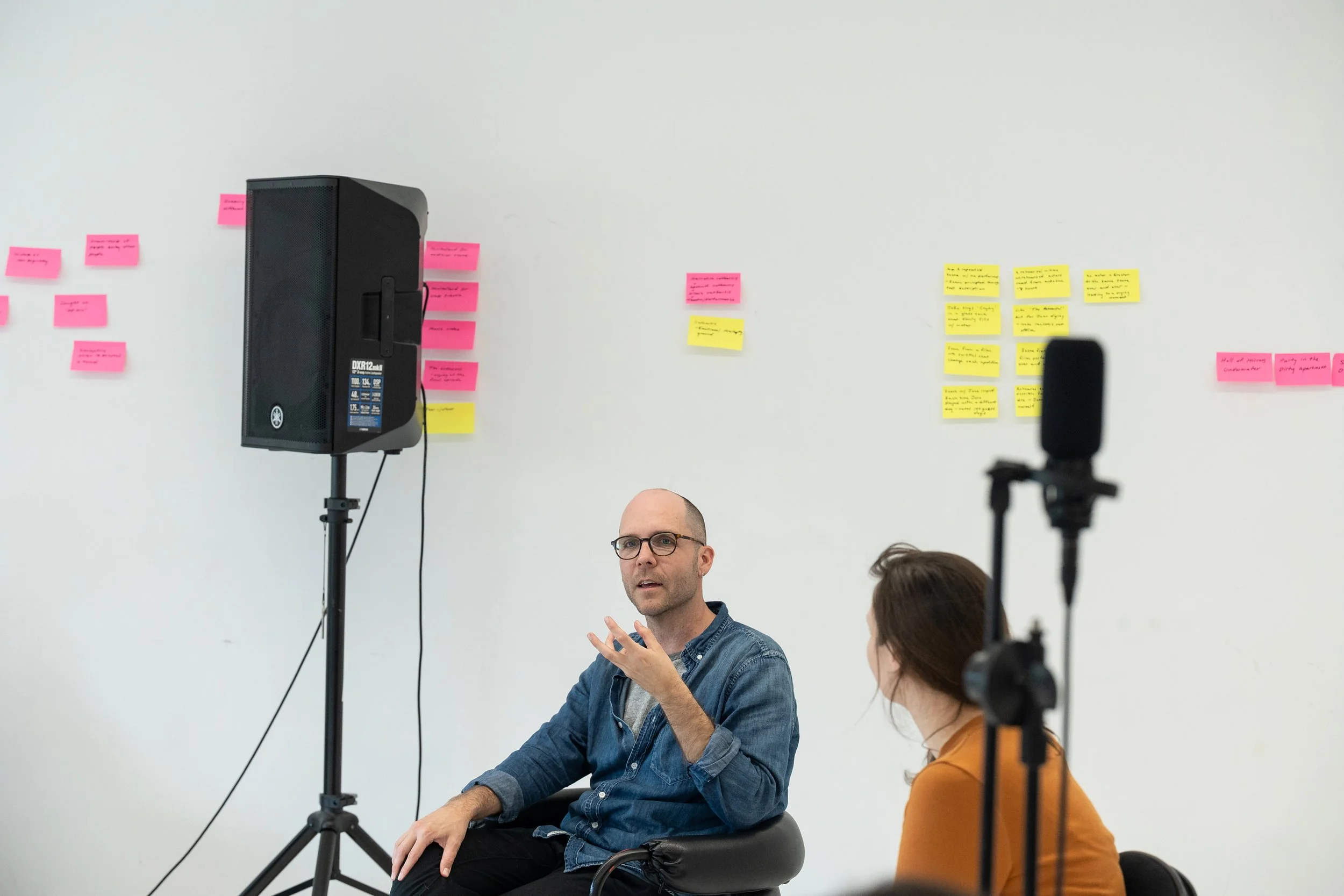
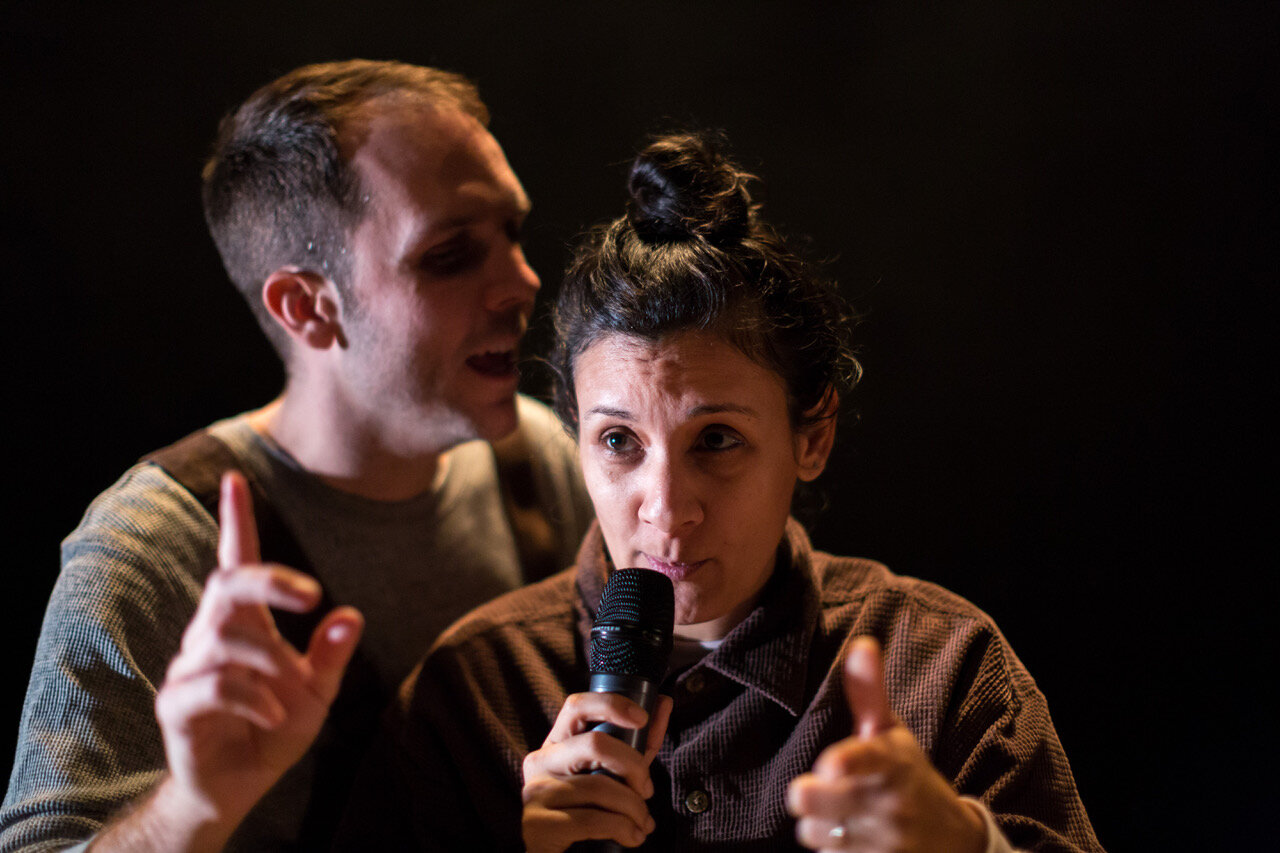
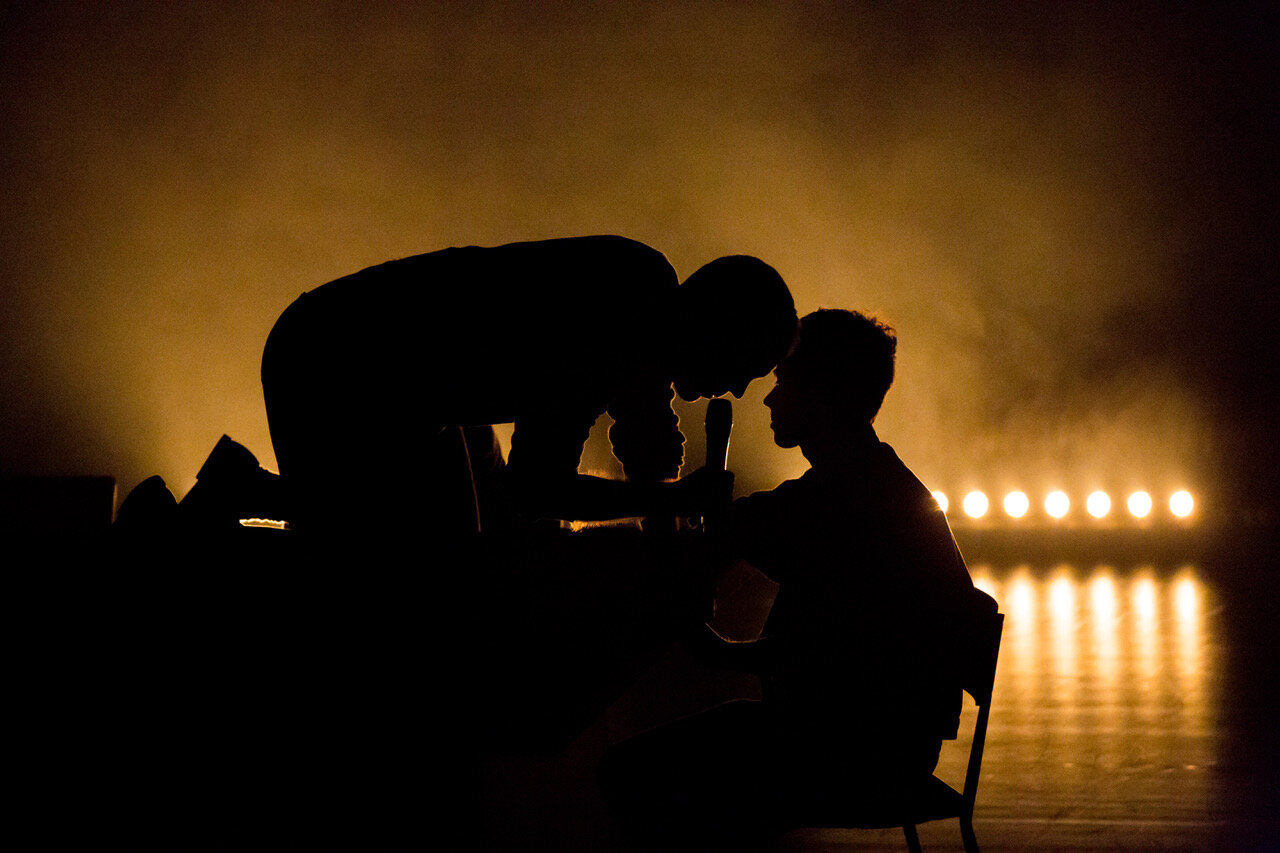
selected images from early studio R&D